
Duncan Oral History Collection
Reconciliation and Equity Voices: Empowering Indigenous 2SLGBTQI+ Communities
Created by the Support Network for Indigenous Women & Women of Colour (SNIWWOC), the collection is part of Reconciliation and Equity Voices: Empowering Indigenous 2SLGBTQI+ Communities. The project connects storytelling with efforts to address racism and discrimination and build more welcoming services in the Cowichan Valley. Its purpose is to preserve histories too often overlooked, deepen understanding, and support a future where Indigenous 2SLGBTQI+ people can live safely and fully as themselves.
Amplifying Voices in Queer Rights and Reconciliation
This project aims to amplify the stories and experiences of Indigenous 2SLGBTQI+ communities. These voices have often been overlooked in the narrative of queer rights and reconciliation conversations.
Truth & Reconciliation Commission Blindspot
For example, none of the Truth and Reconciliation Commission’s 94 Calls to Action mention 2S or LGBTQ Indigenous people, discrimination based on sexuality. By establishing a permanent online oral history collection, we commit to highlighting the history of the Indigenous 2SLGBTQI+ movement, honoring their journeys, success and challenges.
This oral history collection honours the lives, leadership, and contributions of Indigenous Two-Spirit and LGBTQI+ community members. Through personal stories, it celebrates cultural connection, creativity, advocacy, and joy while exploring how colonialism, residential schools, the Sixties Scoop, and gender-based violence have shaped experiences across generations.
Indigenous 2SLGBTQI+ Advisory Committee
An advisory committee of Indigenous 2SLGBTQI+ community members guides the project’s priorities and community engagement, reviews findings about barriers to services, and helps shape recommendations for change. Their lived experience and knowledge keep community perspectives at the centre of this work.
Respecting Privacy & Consent
Not everyone who shared their experiences provided a photograph or consented to be individually featured in this online collection. Some participants are identified by aliases to protect their privacy. The summary brings together themes and insights from these conversations without identifying those participants, honouring their contributions while respecting their privacy and choices.


Toronto Ribbon Skirt Workshop (July 2025)
Hosted by accomplished Indigenous fashion designer Jocelyn Kagige, this two-day workshop is open to learn about the traditions behind ribbon skirts while making your very own! No experience required, you’ll be guided every step of the way!
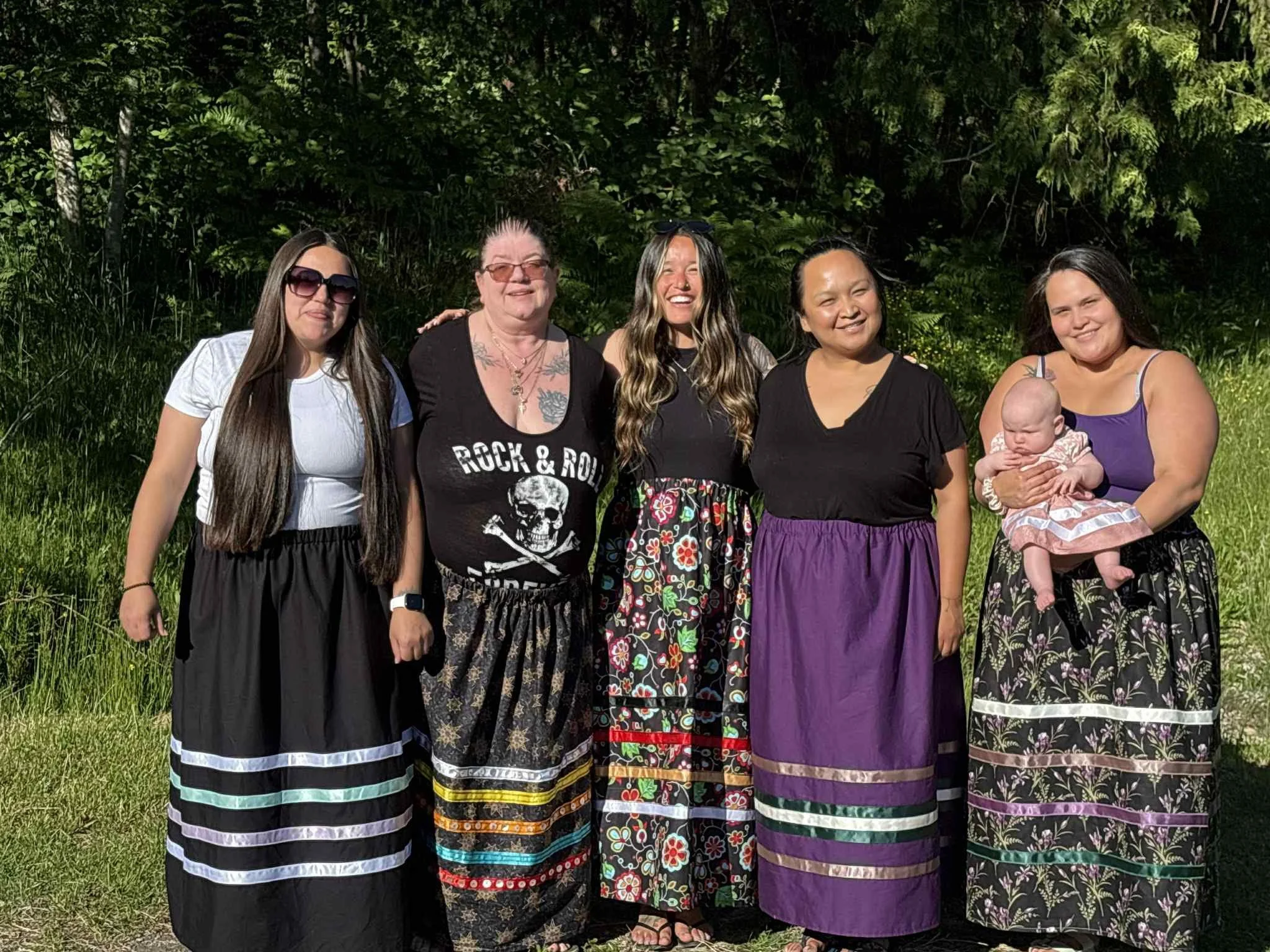
Tishosum Ribbon Skirt Workshop (June 2025)
This workshop was led by two incredible Indigenous artists who bring so much heart to their work: Jayce Henry and Céline Mickey.
Taken place in Jayce’s home territory of Tishosum (Powell River), offering not just a chance to learn traditional art forms, but to be part of something deeper: a space for healing, sharing, and honouring Indigenous ways of knowing.
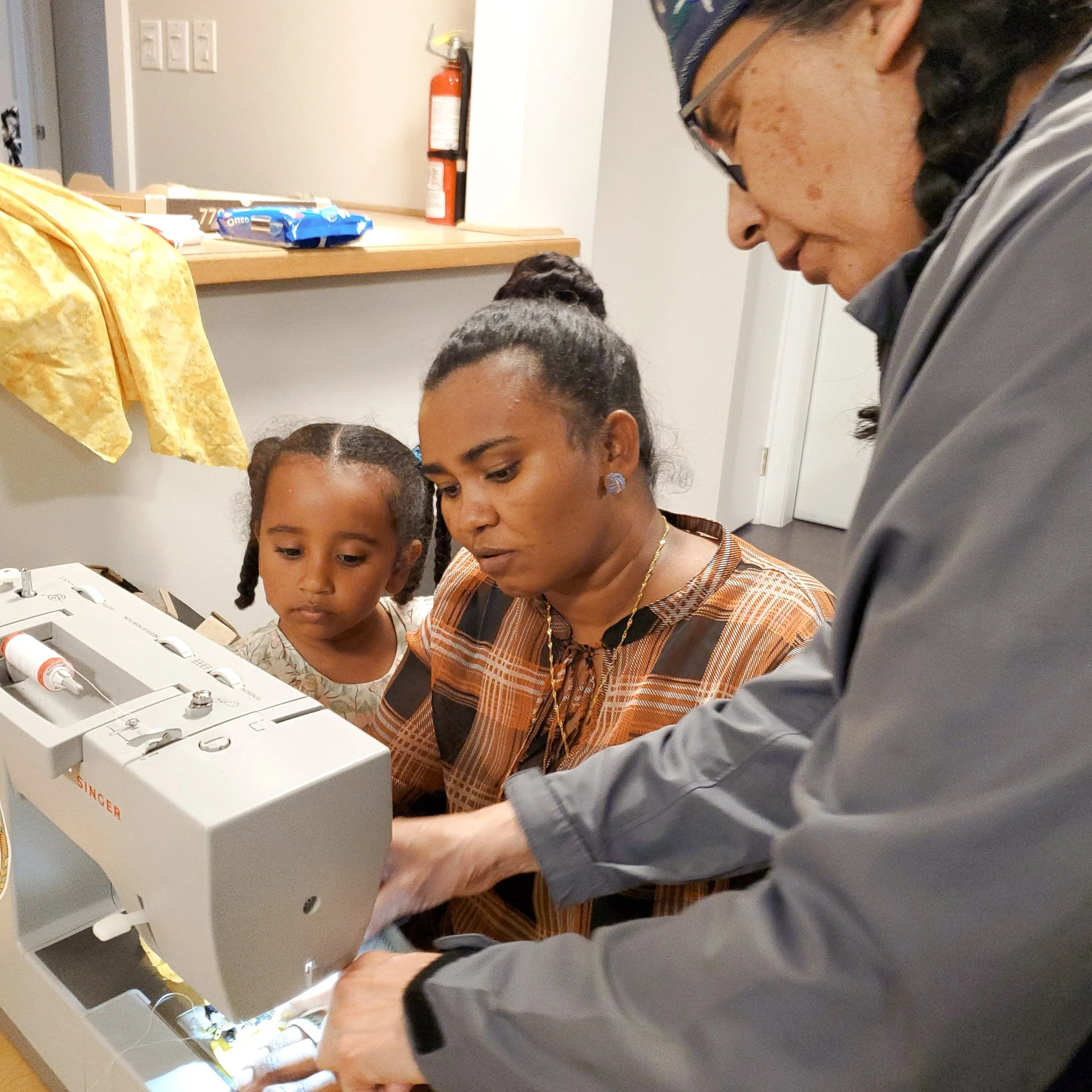
Ribbon Skirt Workshop (2024)
This hands-on workshop will teach you the traditional art of ribbon skirt making, a staple in the Indigenous culture. This workshop is open to all skill levels of sewing, no past experience is required as you will be led by expert Ribbon Skirt makers who will be facilitating this event.
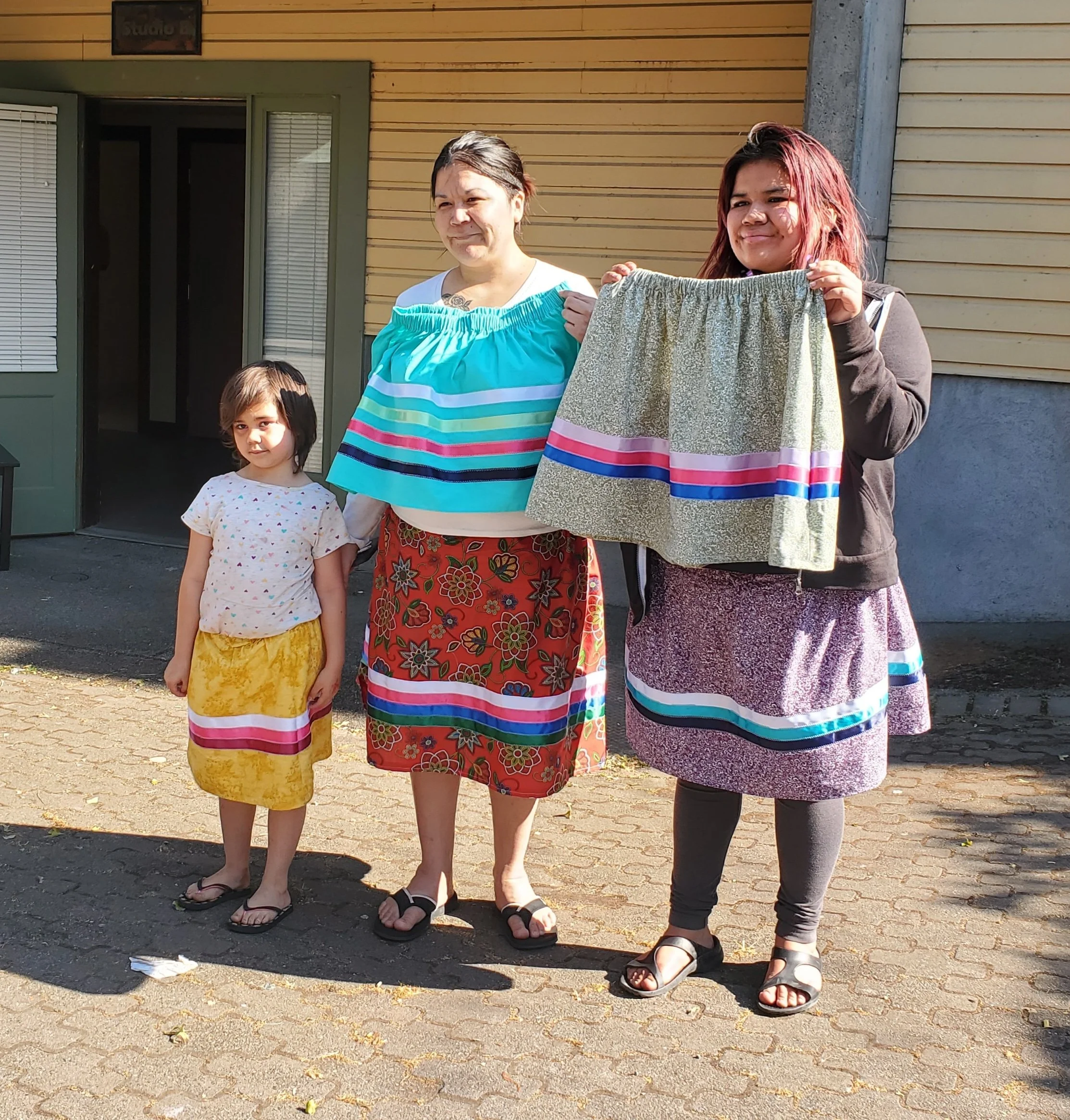
Ribbon Skirt Workshop (2023)
At SNIWWOC's Ribbon Skirt Workshops, Indigenous participants of all ages came together over the course of a 3-day workshop, hosted at the Belfry Theatre, to learn about, design and create their own Ribbon Skirt, fostering community connection to culture, gaining new or furthered experience in sewing/design skills and creating connections within local communities.
Originating in Eastern Indigenous Nations, Ribbon Skirts have come to be worn as ceremonial regalia across Turtle Island and represent the resiliency of Indigenous people, our hope in the creation of these Ribbon Skirts is to empower more Indigenous People to partake in traditional art forms, community and culture.

Oral Histories Project : Bridging the Generational Divide
SNIWWOC's Bridging the Generational Divide: Oral Histories Project saw Indigenous Elders and Indigenous Youths paired together to document Elder's Oral Histories, cultural knowledge and personal stories for future and current generations, supporting both Elders and Youths in opportunities as well as engaging in their cultures and creating connections within their communities.
The Oral Histories Project, which took place over the course of November 2021, was funded by the First People's Cultural Council with recorded Histories to be displayed, with permission from both Elders and Youths, on their First Peoples' Map.
#REPRESENTATIONmatters: An Indigenous Artist Exhibit
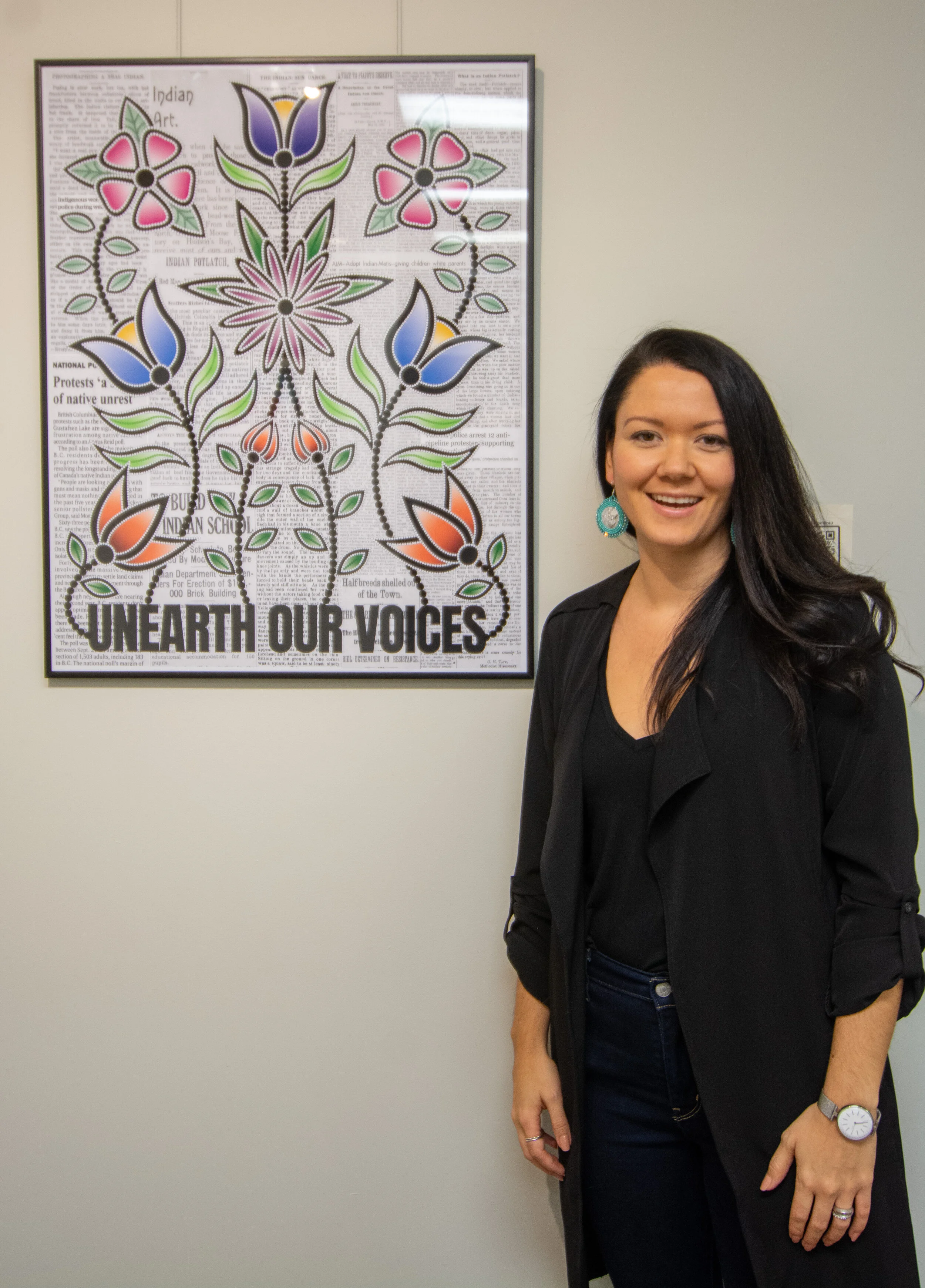
#representationmatters: An Indigenous Artist Exhibit featured artwork created by ten Indigenous youth based in the Greater Victoria and Greater Vancouver area in Fall 2020. The #representationmatters artist project features ten Indigenous youth from ages 18-35 years old, exploring the significance of representation of Indigenous voices through the arts.
Through this project, artists gathered through weekly sessions connecting with mentorship while building a connection network together.
Thank you to the City of Victoria and First Peoples Cultural Council for supporting this project.




Black Joy: A Photo Exhibition
On December 5, 2019 SNIWWOC will be launching a photo exhibit called Black Joy. The “Black Joy” exhibition will display positive imagery of Black youth, in contrast to the negative imagery portrayed by the media.
Black Joy is a hashtag and phrase that has gained increased social media significance over the past few years. As the phrase suggests, “Black joy” is intended to put forward imagery of joyful black youth, and individuals in general.
Thank you to Department of Canadian Heritage and Greater Victoria Public Library for supporting this event!
Reproductive Justice: Raising Our Voices Through Photography
In the summer of 2014, SNIWWOC hosted a series of photo voice workshops that used photography as a means of creating narratives around reproductive health and justice. Topics included the limits of discourses around choice, bodily self-determination, and control over our body. These conversations were expressed creatively though photo narration by workshop participants. The photos created during the workshops were exhibited at Open Space Art Gallery.
The project was led by Tribesty Nguyen and Boma Brown, and sponsored by the Canadian Council for Refugees (CCR).

Photo caption from one of the participants:
“These photos capture reproductive justice in a unique way. The beach rocks represent diversity and unity. The sea represent the openness in reproductive Justice. The beach and the logs all capture the beauty of reproductive Justice. The crew ship represents the fact that sometimes we have to look and find Reproductive Justice in our everyday interactions with others.”
Voices: Exploring healthcare access through photography
Voices” is a photo exhibit which shares stories about the experiences of women of colour. The powerful photography fuels a dialogue on multiple subjects, with a focus on health and access to health care for women often marginalized by many intersecting factors, specifically race and gender.
The pictures from the project were showcased at Solstice Cafe on June 27, 2015, and project brochures were distributed across the city. This project was possible thanks to funding from Department of Canadian Heritage.

"Specialists are sometimes slow, but they are doing a terrific job"


Quadra Village: Behind The Lens
Less than a decade ago, Quadra Village was considered by many to be an unsafe part of Victoria. Over the past few years, residents of the neighborhood, including the Quadra Village Community Centre and the Hillside-Quadra Neighborhood Association, have worked hard to reclaim the neighbourhood.
Presently, Quadra Village is home to a diverse group of indigenous peoples, immigrants and refugees due to its central location and being walking distance to the largest mosque, Sikh Temples, Fairway Market, a Halal butcher and many other multicultural businesses from China, Vietnam, Iran, and Jamaica. Unlike other neighbourhoods in Victoria which have distinct neighbourhood festivities, Quadra Village only has one, which happens in May. This campaign was an opportunity for residents (including business owners) to celebrate their neighbourhood and show us what it looks like through their lens.
This project was possible thanks to funding from Department of Canadian Heritage.